
SEO vs Google Ads for Canadian Businesses: Which Should You Choose?

Kate Bairstow
Kate Bairstow
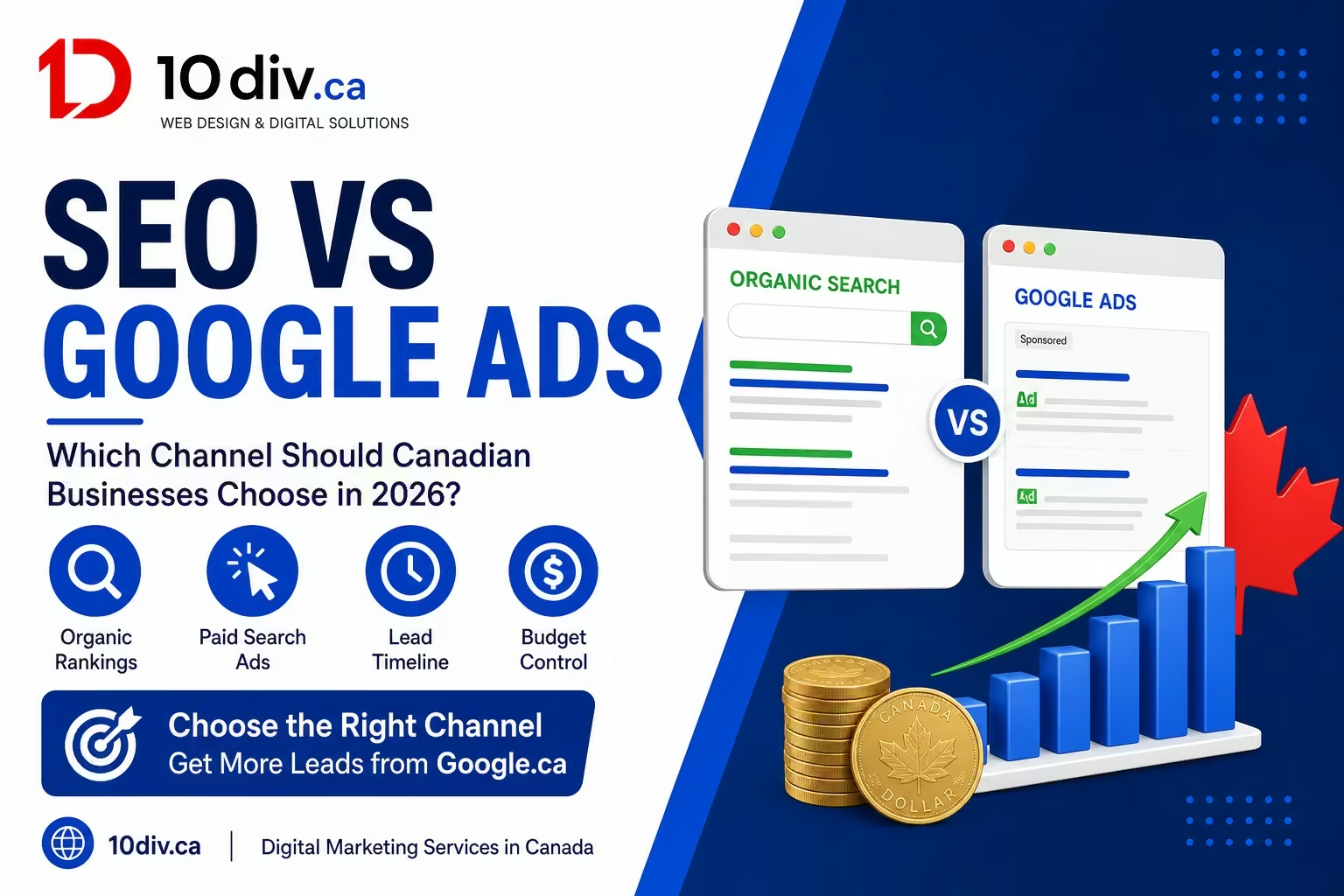
Every marketing conversation eventually lands on the same question: should we invest in SEO or Google Ads? In Canada, the answer is rarely either-or. The two channels work on different clocks, carry different risk profiles, and serve different parts of the buyer journey. SEO builds durable visibility in organic results; Google Ads buys placement at the top of search when you need demand now. This article walks through how each performs for Canadian businesses, what they cost in 2026, and how to decide where your next dollar goes if you cannot fund everything at once.
SEO is the ongoing work of earning rankings: technical health, relevant content, authority links, and local signals if you serve a geography. You do not pay Google per click for organic listings, but you pay for labour, tools, and content over months. Results are uncertain in timing but can keep producing traffic after spend slows.
Google Ads is auction-based placement. You pay when someone clicks (or in some campaigns, when they see an ad). You can appear tomorrow for keywords you choose, but visibility stops when budget stops. For many Canadian service firms, Ads is the fastest path to phone calls while SEO climbs.
| Channel | Typical time to impact | Best for |
|---|---|---|
| Google Ads | Days to 4 weeks | Immediate leads, promos, new locations, testing offers |
| SEO (local) | 2–4 months | Steady local service demand, Google Business Profile growth |
| SEO (national) | 4–9 months | Content brands, e-commerce, competitive head terms |
In 2026, ongoing SEO for a Canadian SMB often runs $1,500–$3,500 per month in agency fees, plus any content or dev fixes. Google Ads management commonly runs $800–$2,500 per month, plus media spend. A local contractor might start with $1,200 in ad spend and $900 in management; a national retailer might spend five figures monthly in media alone.
Cost per lead depends more on offer and landing experience than on channel label. We have seen expensive Ads campaigns become profitable after fixing forms and call tracking, and modest SEO retainers underperform when the site is slow or thin on content.
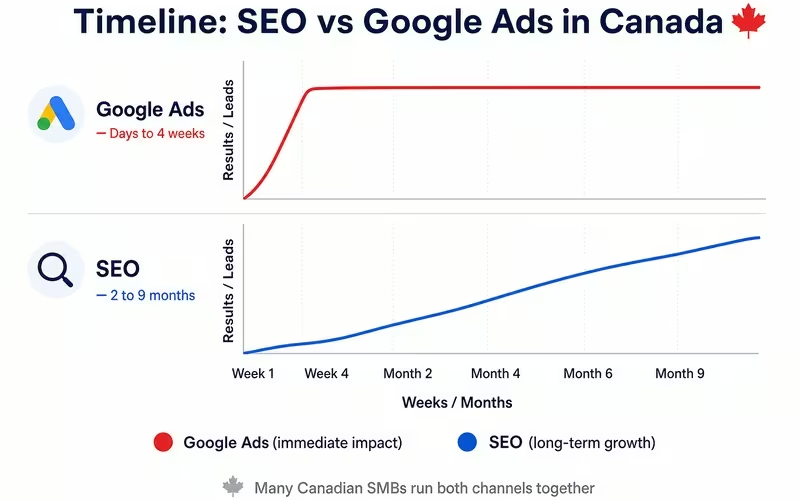
SEO also supports brand trust. Many Canadians skip ads and click organic results by habit. If your organic snippet looks outdated or you do not show on page one for core terms, you are leaving credibility on the table.
Ads also helps you learn which keywords convert before you bake them into SEO content strategy. Treat search term reports as market research, not just a billing detail.
A sensible split for many Canadian SMBs: protect brand name with a small branded Ads campaign, run one or two high-intent non-brand ad groups, and fund SEO that targets the same themes with content and on-page work. Use shared conversion tracking in GA4 so you compare cost per lead apples-to-apples.
Avoid duplicate messaging that confuses users — your ad promise should match the organic landing experience. If you serve Quebec, align language and offers; do not send French ads to English-only pages.
Scenario A: a London, Ontario HVAC company with a $3,500 monthly marketing cap might run $1,800 in Google Ads during peak season plus $1,200 in SEO and $500 in landing page improvements. Scenario B: a B2B manufacturer selling nationally might invert that ratio — heavier SEO and content for long cycles, with Ads only for tradeshow windows and competitor conquest terms. Scenario C: a new franchise location often leans Ads for the first 90 days while GBP and local pages mature.
The channel mix should be revisited quarterly. Ads search terms reveal language customers actually use — feed that into page titles and FAQs. SEO landing pages that rank can lower branded CPC pressure because organic sits alongside paid without sending users to confused mismatched URLs.
If leadership demands instant pipeline, lead with Ads but install conversion tracking on day one. If the mandate is lowering acquisition cost over 18 months, fund SEO technical fixes before blog volume — a fast site with thin content still struggles, but great content on a broken site wastes links and edits.
Canadian buyers compare you to competitors on mobile during evenings and weekends — performance, clarity, and trust signals on your site directly affect whether they call Monday morning. Treat web and marketing investments as revenue infrastructure, not one-off expenses. Measure leads, set realistic timelines, and iterate with your agency partner quarterly so scope stays aligned with business results across provinces and languages.
Sometimes, after years of investment. Most growth-stage Canadian businesses use both at different ratios rather than cutting Ads cold turkey.
Often Google Ads early plus local SEO and a strong Google Business Profile. The combination covers urgent demand and long-term map pack visibility.
No direct ranking boost from paid clicks. Indirect benefits can include faster user data and branded search demand.
Use the same conversion events — qualified form fills, calls over 60 seconds, booked appointments — and compare cost per acquisition monthly.
Want a channel plan based on your market and margins? We will map SEO and Ads scenarios for your business in a free strategy call.


10Div Team
Google Business Profile optimization is still one of the highest-leverage local…
10Div Team
Google AI Overviews are changing how Canadians find answers — and…
10Div Team
If you run a business in Canada and send promotional emails,…